In 1957 Moira Shearer’s husband Ludovic Kennedy was a newscaster for the British TV network Independent Television News (ITN). Kennedy had been a long-standing supporter of the Conservative or Tory Party, then led by Anthony Eden. However, Kennedy became increasingly disenchanted with the Tories particularly over their inept handling of the “Suez Crisis” in 1956. In addition, he had moved to the left politically because of his growing interest in the abolition of capital punishment.
Thus, in 1957 when Kennedy met with Jo Grimmond, the newly appointed leader of the left-of-centre party, the Liberals, and Grimmond encouraged him to join him in his efforts to rejuvenate the party, Kennedy was ready to take up the challenge. However, as ITV did not allow politicians to be employed in the newsroom, Grimmond and Kennedy decided to wait for the right moment to come when Kennedy might have the opportunity to seek office. They didn’t have to wait long.
The standing minister of parliament (MP), a Conservative, for the town of Rochdale in Lancashire, suddenly died and, by law, in order to replace him, a by-election was required. The Liberals had rarely fared well in Rochdale with most elections contested between the Conservative and Labour parties. However, with Kennedy as his candidate, Grimmond sensed an opportunity to win the seat for the Liberals.
Grimmond proposed Kennedy as his choice for the party’s candidate to the election committee of the Rochdale Liberals and it agreed to consider him. Thus, on January 6th, 1958, he travelled with his wife, Moira Shearer, to Manchester by train. There is a press photo of him sitting in his compartment on the train and typing the speech he would give before the committee. In Manchester the Kennedys were met by a member of the committee and driven to Rochdale where Kennedy would attend an interview.
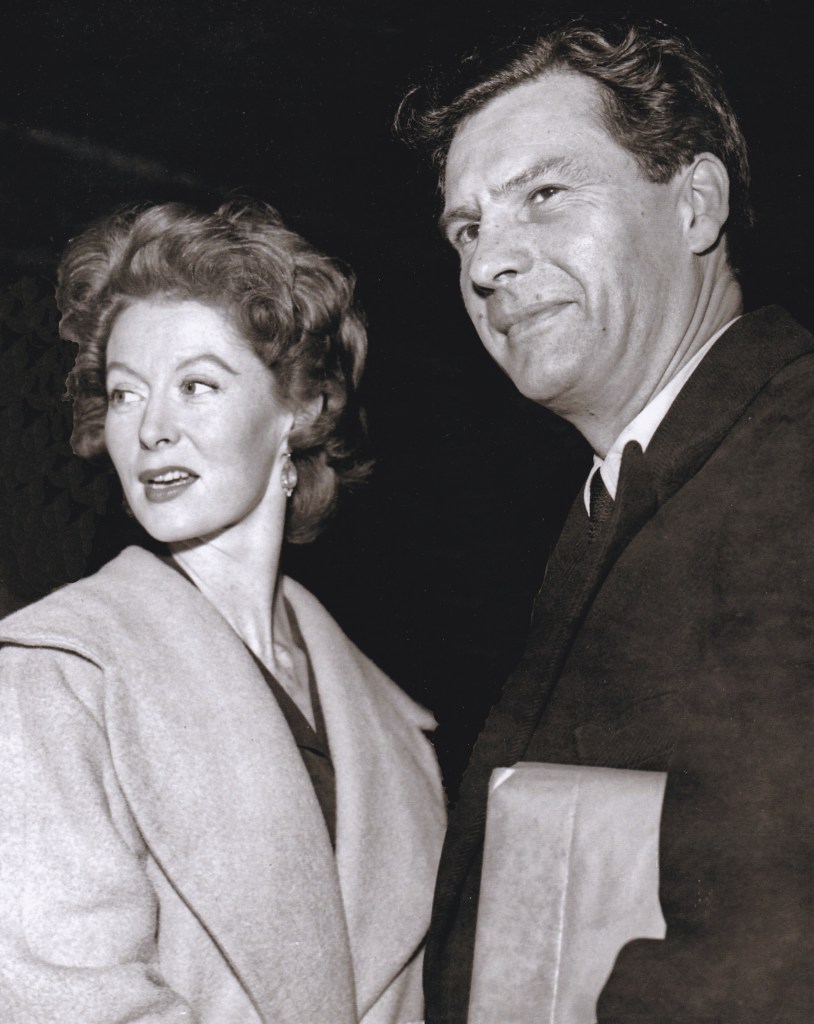
Ludovic Kennedy and Moira Shearer en route to Rochdale, Manchester, January 6th, 1958. Photographer unknown.
After the committee’s approval the Kennedys immediately returned to Amersham in Bucks where they had just moved. Kennedy tendered his resignation to ITV. Within a few days he drove back to Rochdale in his Morris Minor 1000 “Traveller” to find a place to live and to meet with the team that the party had assembled to support him. They didn’t have much time. The election would take place of February 13th.
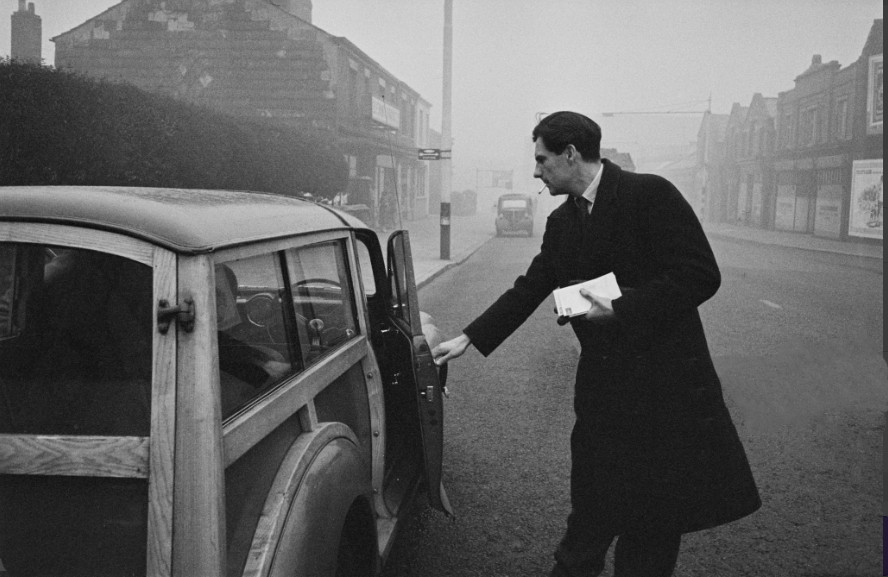
Ludovic Kennedy on a grey, cold January morning in Rochdale. Photographer unknown.
Up until late October Moira Shearer had been appearing in a production of the play, A Man of Distinction, in London. She would commute to the theatre from Amersham by train each afternoon and return late at night. By now she was also the mother of two young daughters, the younger, Rachel, being barely a year old. So, with the help of a fulltime nanny she was juggling her children’s care with her acting commitments.
Man of Distinction was a flop and folded after only a three-week run in the West End. This failure and the brutal realisation that her brief acting career was essentially over was a considerable blow to Shearer. The silver lining of this sudden change in her plans was that she was available to help her husband with his election campaign, and she apparently did so with enthusiasm.
This decision became an important element in Kennedy’s preparation. As a TV “personality” Kennedy enjoyed broad recognition but with his equally famous wife by his side it was likely that his appeal to voters would inevitably increase. Nonetheless, Rochdale was a gritty, working class “mill town” and, thus, fertile ground for the Labour party. It was still going to be an uphill battle for the Liberal candidate.
Grimmond, of course, also realized this and thus he directed an experienced team led by Edward Wheeler to support Kennedy. This support included the provision of campaign literature and the organization of canvassing and public appearances and speeches by both Mr and Mrs. Kennedy. Shearer had not anticipated taking an important role in the campaign and in an article in the newspaper, the Daily Express, she had explained her view of what her part would be. “I am going to Rochdale as Mrs. Kennedy”, she said, “not as Miss Twinkle Toes. I shan’t make speeches. I shall lick stamps if necessary”.
Nonetheless, Jo Grimmond’s man decided she should make a speech. Thus, a month later, on February 6th, she spoke to an audience primarily made up of middle-aged women (and a few, male, reporters) and told them she knew nothing of politics but that her years as a ballerina on the road had put her in the company of many Lancastrian landladies. She went on to say that she might be the Prime Minister yet, the reporter adding that she was, of course, joking.
There were many hurdles to confront in the campaign, chief among them that Kennedy was not a Lancastrian and that both he and his wife spoke a patrician tongue. As there was nothing to be done to deny this, Kennedy’s strategy was to energetically reach out to voters and to “press the flesh” at every opportunity. He was perhaps aided by the fact that the national press had picked up on the election as newsworthy. Thus, there were many paparazzi ready to record the Kennedys at work. There are numerous photos of them canvassing door to door, engaging in conversation would-be voters, including shopkeepers, elderly ladies and manual workers.
In one image published in the Daily Express that a somewhat skeptical reporter suspected was a staged “photo op”, Shearer emerges from an alley behind some washing drying on a line. Was there, he implied, no limit to what Grimmond’s crew was prepared to try for their cause? Or, perhaps, the reporter concluded, it was simply an opportunity that the alert photographer could not pass up.
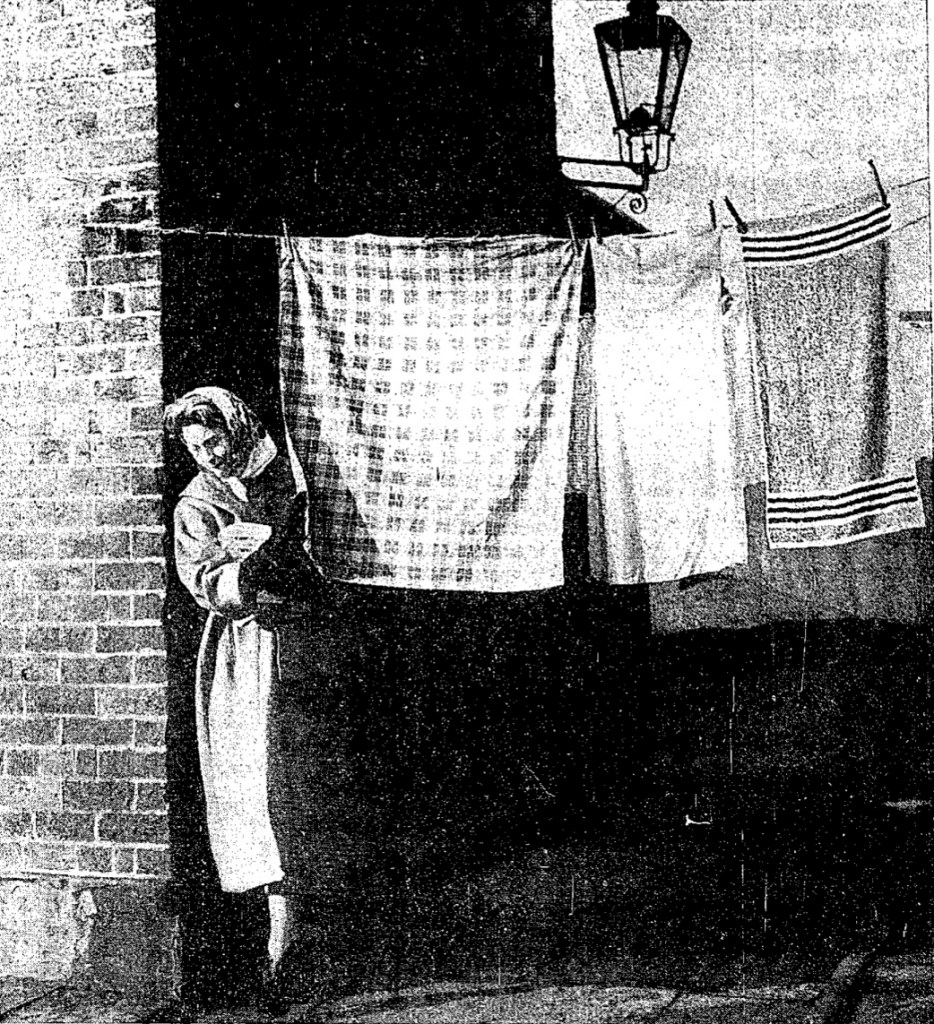
Moira Shearer campaigning for her husband in Rochdale. January or February 1958. Photographer unknown. Published in the Daily Express.
Kennedy’s campaign was vigorous and effective, but he did not win the election. Instead, he came in a respectable second to the Labour candidate. A few days after his concession speech the Kennedys returned to Amersham to plan their holiday in the sun at a rented villa in Nice in the South of France.
A year later Kennedy was to run for the same seat in the General Election. Once again, he was second to the Labour candidate but, this time, by a tighter margin. This loss represented the end of his political career, and he returned to writing and campaigning for more personal causes.
Later in 1958 Moira Shearer briefly returned to the stage appearing in a Royal Command Performance of A Midsummer Night’s Dream at The Old Vic in London and in a short run in Oxford of a play titled Triangle. In 1959 she appeared briefly in a film, Peeping Tom, directed by Michael Powell and, in 1960, danced again in a French film, Black Tights. She took the role of Roxane to Roland Petit’s Cyrano in a ballet choreographed by him. Subsequently she returned to private life in Amersham and had two more children while living there. She quietly disappeared from the spotlight.
Sources.
The Daily Express, January 7th, 1958
“The Candidate’s Wife …. or a Picture for Cynics”. The Daily Express, PhotoNews, January or February 1958. Exact date unknown.
The Guardian.com/politics/the-northerner/2016/jan/02/ludovic-kennedy


Leave a Reply